
Ofgem’s cap and floor scheme aims to unlock investment in Long Duration Energy Storage (LDES), which will become increasingly important in maintaining grid stability as the UK transitions towards a more renewable electricity system. This article explores the proposed mechanism to determine cap and floor levels and what this means for the financing and bankability of LDES projects.
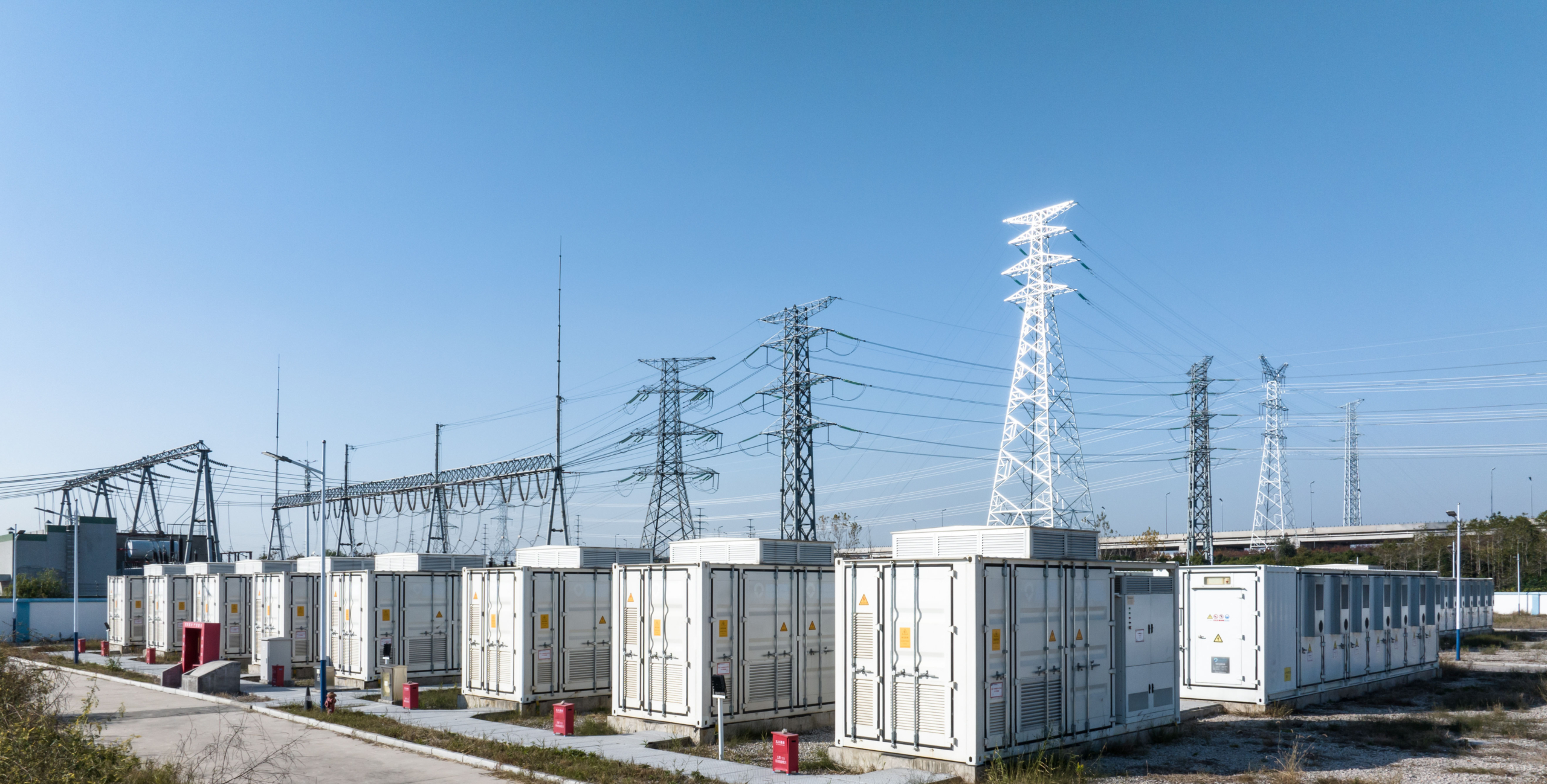
The dramatic increase in renewable generation in the UK in recent years, coupled with its inherent intermittency, has increased the need for flexible assets capable of storing electricity during periods of excess renewable generation, and discharging it when demand exceeds supply. LDES can also help to reduce renewable curtailment by storing generation that would otherwise be constrained by the grid, an issue that is becoming increasingly prevalent as the penetration of weather dependent assets continues to grow.
An often-asked question in the context of a renewable-dominated system is “what happens if the sun doesn’t shine, or the wind doesn’t blow?”. The latter is particularly problematic: both because of the relative volumes coming from offshore wind (several GW / year of capacity awarded, with only minimal signs of slowing down), and because low wind periods can last for several days (rather than merely several hours) at a time. Whilst short-duration storage provides valuable intra-day flexibility, it cannot bridge these prolonged periods of supply-demand imbalances; maintaining adequate supply through such events requires assets capable of storing and dispatching energy over significantly longer durations. This encompasses technologies such as pumped hydro, liquid air energy storage, compressed air energy storage and long-duration batteries.
The need for these assets is clear; however, their capital-intensive nature and the uncertainty around their long-term revenues can make projects economically unattractive to developers and challenging to finance for lenders.
The UK government announced its intention to implement a cap and floor scheme in October 2024. Following a period of consultation and detailed project assessment, Ofgem published its ‘minded-to-decisions’ list, naming a portfolio of 16 projects provisionally selected to benefit from the support scheme (out of 77 which met the initial eligibility criteria).
he proposed portfolio comprises exclusively new-build assets, with a combined capacity of 7,645MW, split as follows:
-
- Pumped Storage Hydro (PSH): 3900MW (3 projects)
- Lithium-ion BESS (Li-ion BESS): 3630MW (11 projects)
- Vanadium Flow/Zinc Battery (VFB/Zn): 65MW (1 project)
- Compressed Air Energy Storage (CAES): 50MW (1 project)
Ofgem is now consulting on its minded-to decisions and proposed licence conditions for Window 1 projects, with final cap and floor awards expected in autumn 2026. As such, some elements of the scheme are still under review and may be subject to change.
Cap and floor mechanism
The support mechanism proposed by Ofgem aims to stabilise project revenues within a pre-determined cap and floor range. These levels are designed to strike a balance between providing sufficient support to incentivise investment while ensuring the subsidy costs remain proportionate. The revenue support mechanism, as well as the concepts used in calculating the cap and floor, are derived from the existing interconnector subsidy regime, with several nuances tailored to reflect differences in the characteristics of the respective markets and technologies.
Administrative Cap
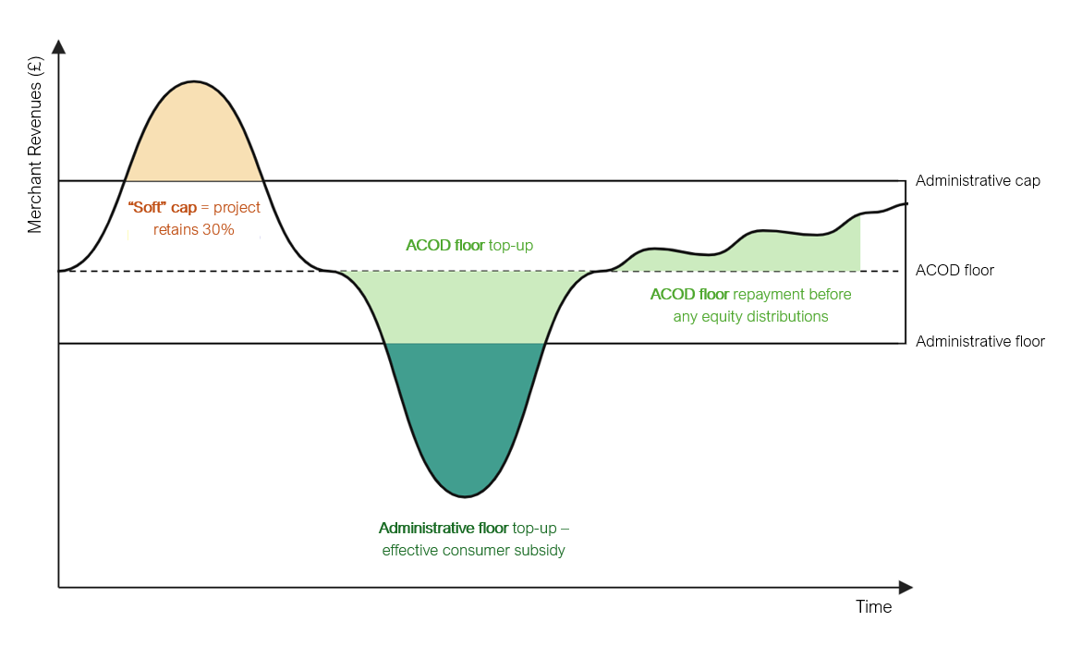
The cap acts as a “soft” limit on the annual revenue that can be achieved by the project. Where revenues exceed the pre-determined cap, in a given annual period, 70% of the excess is returned to consumers, while the remaining 30% is retained by the project. This represents a key difference from the interconnector regime, which applies a hard cap, and is intended to preserve the asset owner’s incentive to maximise revenues even once the cap has been exceeded.
Following a period of consultation, Ofgem has decided to adopt a single administrative approach to determine the unique cap for each eligible asset (moving away from the two-approach methodology, administrative and competitive caps, proposed prior to consultation).
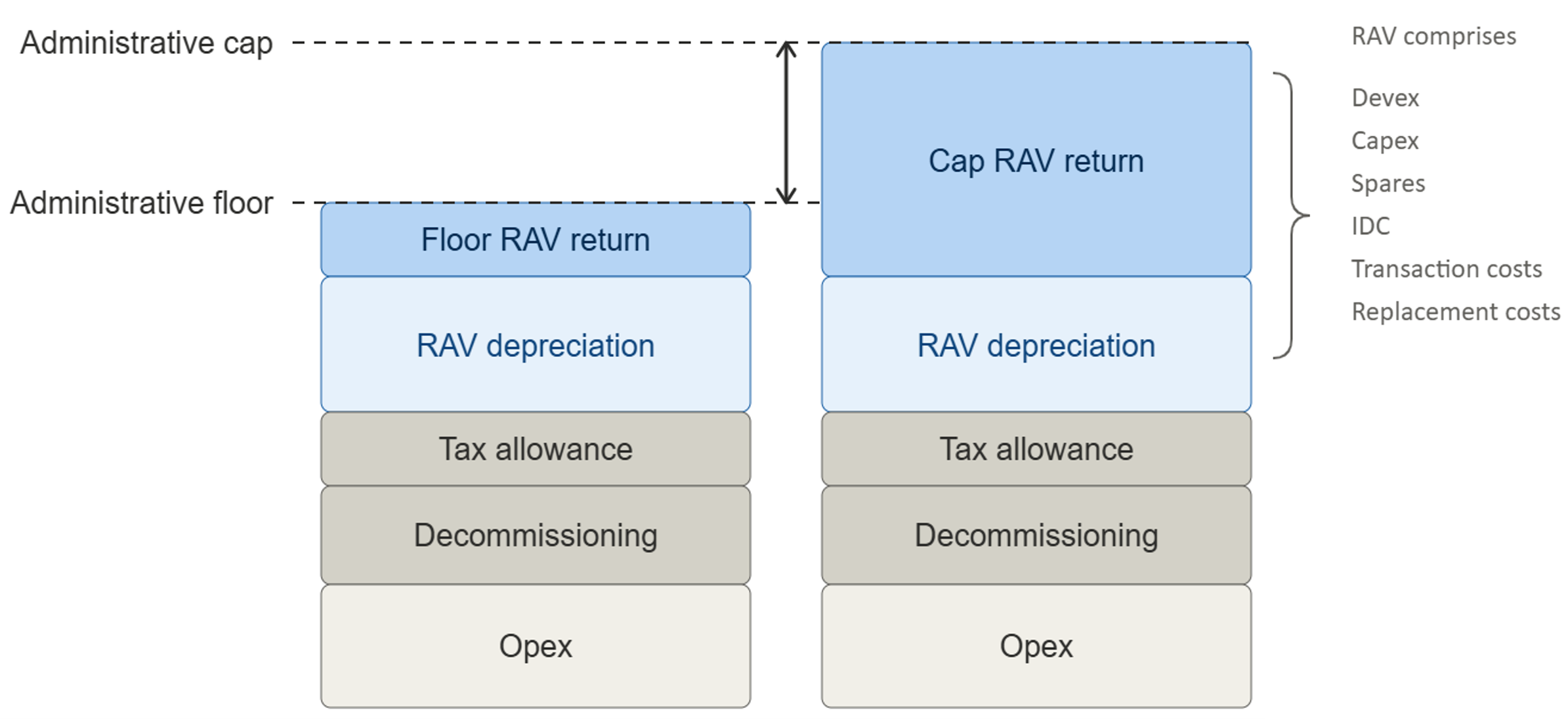
The level of the administrative cap will be determined in large part based on the project’s Regulatory Asset Value (RAV). The RAV represents what Ofgem takes to be the project’s value measured by its economically efficient costs, and comprises development expenditure, capital expenditure, spares, interest during construction (IDC) at an Ofgem-specified rate, transaction costs and replacement costs.
The project-specific cap is then calculated based on opex, decommissioning costs, depreciation of the RAV, the return on the RAV and a tax allowance. The return component will be calculated by applying a notional cost of equity to 100% of the Regulatory Asset Value (RAV). This is a real return (indexed at CPIH), derived from the output of a CAPM model, and will be subject to change based on economic conditions at FID. The revenue sharing mechanism above the cap also allows realised project returns to exceed this level.
Floor(s)
As the name suggests, the floor acts as downside protection, ensuring a minimum level of revenue is achieved in each annual period – mitigating the risk of adverse merchant conditions leading to returns insufficient to cover efficient costs and debt service requirements of the project.
Unlike the cap, project-financed assets can access two distinct floors: an administrative floor and an actual cost of debt (ACOD) floor. Before setting out how these are calculated, it is worth highlighting what these are intended to capture and why the distinction is important.
The administrative floor mirrors the cap in being derived from the project’s RAV, and is therefore a measure of what Ofgem thinks the floor should be; the ACOD floor reflects the project’s actual debt service obligations and is therefore a target guarantee level which lenders would (ideally) seek before providing project finance. Where projects benefit from support at a level below the ACOD floor but above the administrative floor, they are required to make repayments to consumers, on an annual basis via the system operator, before any equity distributions can be made. This ensures a level playing field between balance sheet-funded and project-financed assets and shields consumers from the cost of excessive gearing (which is capped at 80% by Ofgem or such lower level as dictated by lenders’ credit requirements) or overpriced debt.
Administrative floor
Follows a similar ‘building-block’ approach to the administrative cap, with the key difference being the return on RAV component. For the floor, this is based on a notional cost of debt, rather than the notional cost of equity, with the cost of debt determined using a low investment grade benchmark index as at the relevant reference date.
Building blocks of the administrative cap and floor levels
Actual cost of debt (ACOD) floor
Ofgem recognises that the administrative floor may be insufficient to cover the debt service requirements of project-financed assets. Projects can therefore elect to also benefit from an ACOD floor, which is based on the actual financing terms achieved through a competitively secured financing process. The ACOD floor is intended to cover only the project’s debt service obligations and is thus calculated independently to the asset’s cost base / RAV. The administrative floor is derived from the RAV, which is akin to an accounting measure of the asset’s value; in contrast the ACOD floor is based on the project’s actual cash financing requirements. But cashflows can be volatile, and so further work will be required to ensure that the guarantee provided by the ACOD floor succeeds in protecting lenders.
Financing considerations
The similarities with the existing interconnector C&F regime, which has successfully supported project finance, provide a strong precedent for the bankability of the LDES framework. Some of the key financing considerations include:
Revenue certainty
The ACOD floor guarantees lenders that the project will have sufficient cash flow, on average, to service 100% of their annual debt service obligations, which will translate to more aggressive debt sizing and gearing potential for successful projects. This will provide lenders with more comfort than a typical floor structure we have seen for shorter duration batteries, whereby the floor level is often below the lender breakeven amount.
Availability and liquidity
Whilst the floor provides considerable lender comfort, there are conditions attached. For LDES assets to be eligible to benefit from floor top-ups in any annual period, they are required to meet a project specific minimum availability threshold (MAT), which will likely be an area of lender focus and sensitivity analysis. In addition, to the extent that there is a misalignment between the timing of LDES floor payments and debt service obligations becoming due, lenders may require some form of liquidity reserve account to manage any temporary periods of cash shortfalls. This isn’t solely a feature of annual floors vs semi-annual debt payments; the floor is calculated as an average over the debt life, rather than on a period-by-period basis as is typical for project finance debt sculpting. This creates cash flow timing and inflation risks that need to be managed.
Optimisation constraints
To avoid cannibalisation of unsubsidised short-duration batteries, it remains unclear whether LDES assets will face restrictions on trading strategies or market participation. Lenders will require any such restrictions to be fully reflected in the merchant revenue assumptions.
Debt tenor
As is typical with other government support schemes across renewable technologies, we would typically expect lenders to be comfortable with extending the debt tenor out until near the end of the regime length, possibly with a 1–2-year tail, depending on the strength of the warranty package or expected asset life. Ofgem currently assumes a 25-year regime length as its default assumption; however, developers can request for the final duration to be longer or shorter depending on the specific technology and project characteristics.
Asset optimisation and offtake strategy
The C&F regime is compatible with floors, tolls and virtual tolls, but developers should consider how these structures interact with the C&F, including the allocation of merchant upside/downside and which associated costs are eligible within the C&F cost base. This will be key to optimising project economics and debt capacity.
Technology specific factors
Some factors are specific to the technology in question e.g. asset life, MAT, technology track record, degradation etc. and should also be carefully considered during the financing process.
Our approach
Elgar Middleton has advised on over 2.1GW of BESS transactions across both debt and M&A, including raising £1bn+ of debt across a range of offtake strategies, including tolls, floors, financial tolls and fully merchant structures. This breadth of experience has given us a deep understanding of the technical and commercial aspects of the dominant technology in the LDES Cap and Floor regime and positions us well to structure complex transactions and navigate the financing and revenue considerations outlined above.
If you are considering a financing of a UK LDES project, we would be delighted to discuss how our experience can help you navigate the complexities and secure an optimal outcome.